


The immigration system of Australia is changing in the year of 2026 and is now getting more structured and advanced. Australia still ranks higher in the most popular destinations for migrants across the world. It has a strong economy, a high standard of living, globally ranked universities and a diverse culture. So many people move to Australia for different purposes. Thousands of people come to Australia every year to study, work and settle permanently. International students, skilled professionals and families see Australia as a land of opportunity where they can build a better future.
However, so many people get confused when they start searching immigration options. But many questions come to mind when you search about it, like Should you go on a student visa first? Is a work visa a better route? Can you apply directly for permanent residency? Or is a partner visa the fastest pathway if you have an Australian partner? Understanding these pathways is very important before ending up on one decision. Each visa type has its own eligibility requirements, benefits and future outcomes. In this guide, Immigration Buddy explains the main Australia immigration pathways Student Visa, Work Visa, Permanent Residency (PR) and Partner Visa in simple terms so you can pick the best option for your situation.
Australia has a great quality of life which makes it a popular choice for hundreds of newcomers each year. The country delivers great education options, strong career possibilities and a multicultural society that openly welcomes international residents. Most of the migrants come with a desire to become permanent residents because PR allows them to live, work and enjoy social benefits in the country.
Australia’s immigration system is made to attract skilled workers, international students and families who contribute to the country’s economy and society. A temporary visa usually comes with a benefit that later leads to permanent residency. For example, many international students study in Australia, gain work experience and then they become eligible to apply for PR through skilled migration programs. As migrants have so many pathways available, understanding the differences between visa types is the first step toward planning a successful migration journey. First, we will get to know four pathways of immigration that migrants apply for to move to Australia.
The student visa of Australia comes under the subclass 500. It permits international students to study full time in Australia at authorized institutions. It is among the most common entry routes for people who eventually want to settle in the country. Australia hosts thousands of international students each year, making their education a powerful export sector. Students normally enroll in courses such as diplomas, bachelor’s degrees, master’s programs or vocational training.
Studying in Australia offers so many benefits:
Students can also work part-time during their studies which helps them gain work experience and manage living costs.
For many migrants, studying in Australia is the first step toward permanent residency. The typical pathway looks like this:
First: Enroll in a CRICOS-approved course
Second: Apply for a Student Visa Subclass 500
Third: Complete at least two years of study in Australia
Four: Apply for a Temporary Graduate Visa Subclass 485
Five: Gain skilled work experience
Six: Apply for Skilled Migration PR visas
The Temporary Graduate Visa that comes under Subclass 485 is one of the great Australia Immigration Pathways that allows graduates to stay in the country and work full time after completing their studies. Based on their qualification, graduates become eligible to stay in Australia for 2 to 6 years to gain valuable work experience. This experience usually helps applicants qualify for skilled migration programs that result in permanent residency.
While the student visa pathway is popular among migrants, it also comes with some challenges.
Still, many migrants prefer this route because it allows them to build Australian qualifications and local work experience.
If you are a professional who already has experience in a high demand occupation, applying for a work visa may be a faster pathway to becoming eligible to stay in Australia.
It is a common work visa in which an Australian company sponsors a foreign worker for a qualified job. Under modern immigration policies, employer sponsorship visas may have different streams depending on salary level and occupation. These visas give an option for foreign workers to live and work in Australia while working for the sponsoring company.
Employer sponsorship is usually a strong pathway because the applicant already has a job in Australia.
Another known work pathway is a point based skilled migration system. These visas give the option to skilled professionals to apply freely without employer sponsorship.
Common skilled migration visas are:
Applicants can earn points based on factors such as:
The higher the points score, the better the chances of receiving an invitation to apply for permanent residency.
Work visa gives several advantages:
For migrants who already have strong work experience in high demand industries such as healthcare, IT, engineering or education, work visas can be the most suitable option for them.
Permanent residency is the supreme goal for many migrants because it permits them to live in Australia indefinitely.
A permanent resident can:
PR holders enjoy many of the same rights as citizens, except voting rights and some government positions.
Australia introduces several PR visa categories, but the most common are:
There are a few factors that can improve your chances of getting PR:
For international students and temporary workers, gaining Australian work experience usually has an important role in achieving permanent residency.
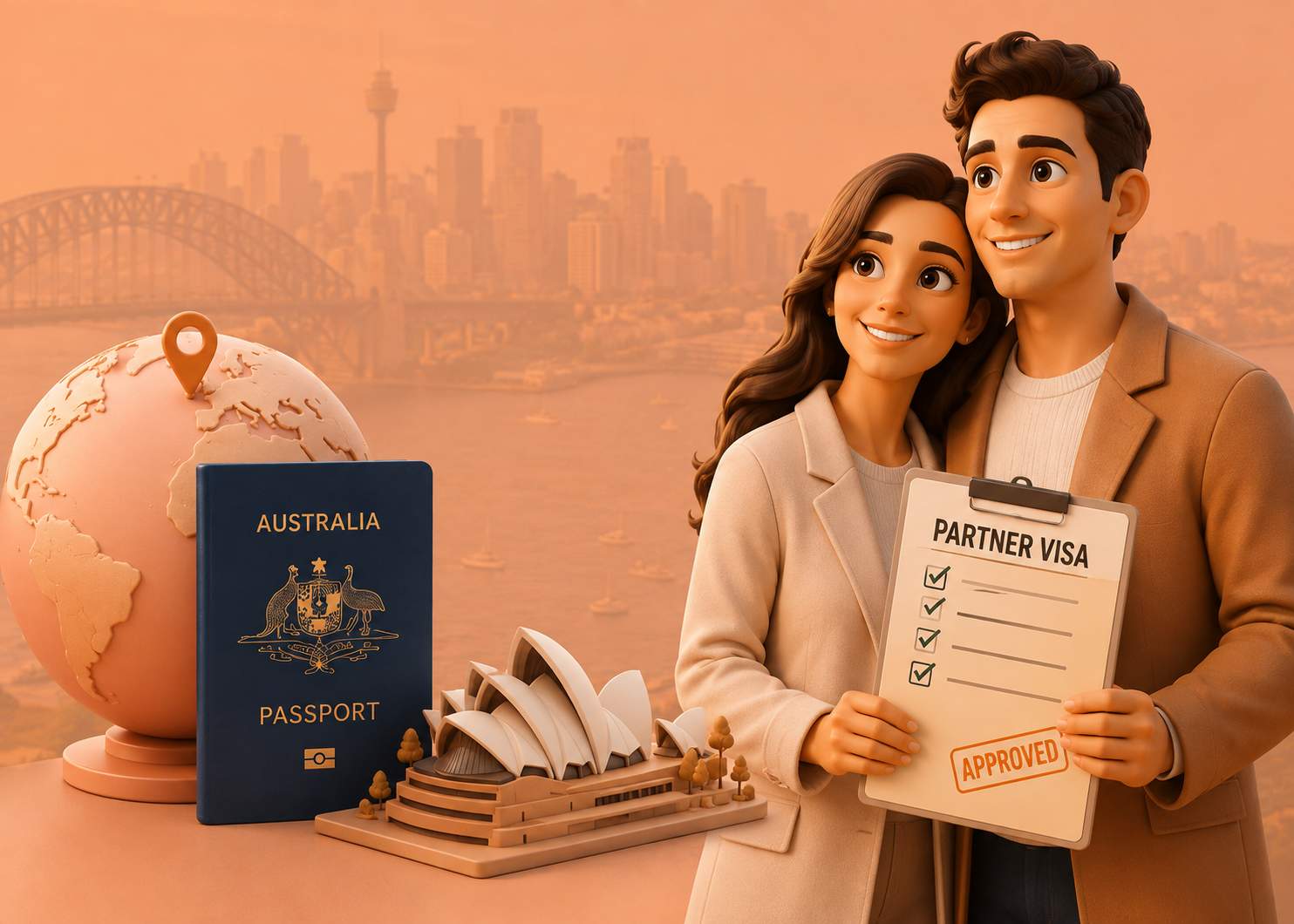
For a person who is in a genuine relationship with an Australian citizen or permanent resident, this partner visa can be a direct route to permanent residence in Australia.
A partner visa allows spouses or de facto partners of Australian citizens or permanent residents to live in Australia.
The application has two stages:
This process allows immigration authorities to confirm that the relationship is genuine and ongoing.
Common partner visa options are:
Applicants must give evidence that their relationship is genuine. Immigration authorities consider factors such as shared finances, living arrangements, social recognition and loyalty in the relationship.
Partner visas give several advantages:
However, the process needs strong documentation and proof of a genuine relationship.
Preferring the best pathway relies on your personal circumstances, like education, work experience and family situation.
Let’s see a quick comparison:
| Pathway | Best For | Key Benefit |
|---|---|---|
| Student Visa | Young students or career changers | Study and work opportunities |
| Work Visa | Skilled professionals | Direct employment in Australia |
| PR Visa | Highly skilled applicants | Permanent settlement |
| Partner Visa | People with Australian partners | Direct family-based pathway |
No one solution applies to all terms. Some migrants come as students and later transition to PR, while others move directly via employer sponsorship or partner visas.
Before starting your immigration journey, make sure to view these factors.
Australia regularly updates visa policies and eligibility rules. So staying informed about policy changes is very important before applying.
Moving to Australia needs financial preparation for:
If you are planning to study or work in Australia, prefer a field that matches Australia’s skilled occupation lists. This increases your chances of qualifying for PR later.
Immigration processes can be a little hard. But if you take the help of professional consultants like Immigration Buddy, it will benefit you to understand visa requirements and avoid mistakes.
We believe that migrating to Australia is a life changing decision. Our mission is to simplify the immigration process and guide you at every stage of your journey.
Our services have:
We give personalized advice based on your profile which further helps you select the pathway that gives the highest chance of success.
Australia gives multiple immigration pathways and each suits a different purpose. Be it study, work, PR or joining your partner, there is a visa option that is made to match your goals. The main thing is to understand the differences between the Student Visa, Work Visa, PR Visa and Partner Visa. Among these Australia Immigration Pathways, each has its own conditions, benefits and future outcomes.
Some people take education first and then apply for PR. Others may qualify directly through skilled migration or employer sponsorship. And some get a permit with their Australian partner, the partner visa offers a family based pathway to permanent residency. Preparing for your migration journey carefully can make a big difference.
When you go for the right strategy and professional advice, your dream of living in Australia can become a reality. If you are ready to see your options, Immigration Buddy is here to help you take the next step toward your Australian future.
Q. Can a student apply for a partner visa in Australia?
Yes, you can apply for a Partner Visa while having a valid Student Visa. You must keep studying and fulfill Student Visa conditions until it finishes.
Q. What is the easiest pathway to get a PR in Australia?
With a 491 visa, you can get an easy PR pathway to Australia. You can get it via regional commitment. The 491 visa is a provisional visa specifically made for regional migration.
Q. What does a pathway student visa mean?
The Pathway Student Visa allows international students to study up to 3 courses consecutively, one after the other, on a single student visa for up to 5 years.
Q. What is the difference between a student visa and a work visa?
Student visas are for full time study and allows you to study and part time work. Work visas need a valid job and usually an employer sponsor.
Q. Can I apply for PR without a job offer?
Yes, you can apply for Australian Permanent Residency without a job offer from points tested skilled migration visas. It has a Skilled Independent visa subclass 189 or a Skilled Nominated visa subclass 190.
study abroad and open doors to world class education, culture, and career opportunities! Your dream degree awaits overseas—take the leap today and shape a brighter tomorrow
.jpg)
 (1).jpg)

.png)
 (1).png)

.jpg)
.png)
.png)
.png)

.png)


.png)
-compressed.jpg)
 (1).png)
.png)
 (1).png)
.png)



.png)
.png)



.jpg)
 (1).jpg)

 (1).jpg)
.jpg)
.jpg)
 (1).jpg)